Japanese interval walking, reviewed
Rebranded on TikTok as 'Japanese walking', this is one of the best-tested walking programs there is. The catch is that the fast minutes have to be genuinely hard.
- Results · 30%
In middle-aged and older adults it improved aerobic capacity, thigh strength and blood pressure more than steady walking, though the gains are modest in absolute terms.
- Evidence · 20%
Tested directly in a randomized trial and large uncontrolled studies, but most of the research comes from the team that developed it, and the main trial analyzed only people who hit their targets.
- Time efficiency · 20%
Interval walkers improved more than steady walkers while spending less time walking, a good return, though many trial participants did more than the 30-minute minimum.
- Safety · 15%
It is walking, and the developers report minimal adverse events, which makes it one of the safest ways to add intensity.
- Accessibility · 15%
Needs nothing but shoes and a timer, and anyone who can walk briskly can learn it in one session.
Walkers over 50, beginners, and anyone who wants more from a daily walk without running
You are already fit enough that fast walking barely raises your breathing, unless you add hills
The short version
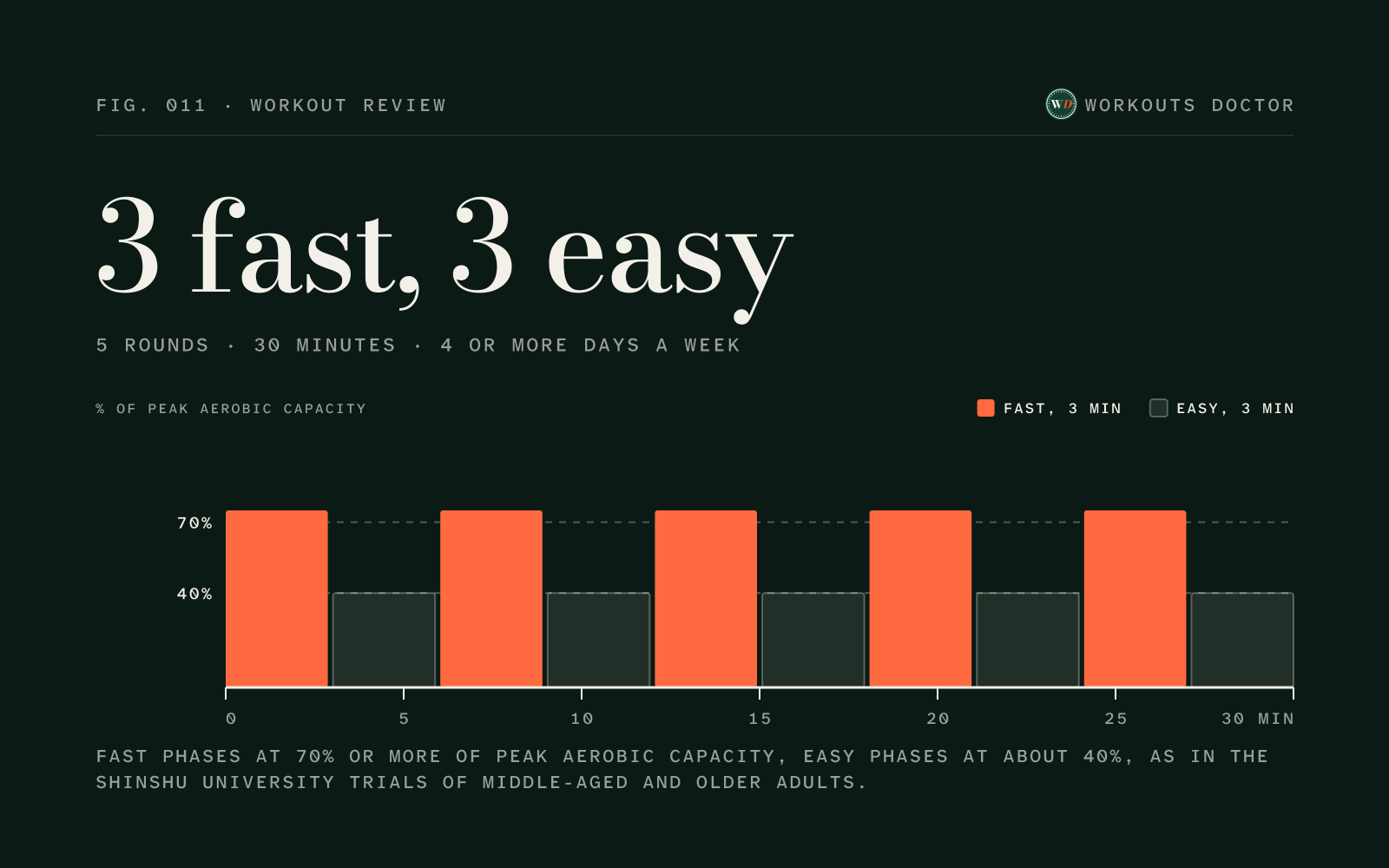
- Japanese interval walking means at least 5 rounds of 3 minutes fast (about 70% of peak aerobic capacity) and 3 minutes easy (about 40%), on 4 or more days a week.
- In a 5-month randomized trial of 246 adults averaging 63 years, interval walkers who hit their targets gained 13% to 17% in thigh strength and 8% to 9% in aerobic capacity, and their systolic blood pressure fell 9 mm Hg.
- Steady walking of 8,000 or more steps a day produced much smaller changes in the same trial, even though those walkers spent more time on their feet.
- In a study of 679 participants, gains rose with fast-walking time up to about 50 minutes a week and then leveled off, so the minimum protocol is close to enough.
- Adherence is the weak spot: over 22 months, participants completed about 70% of their target walking days.
The better prescription
No. 011Prescribed forAdults, especially 50 and over, who walk and want more fitness from the same time
- Dose
- 5 rounds of 3 minutes fast and 3 minutes easy: 30 minutes
- Frequency
- At least 4 days a week
- Intensity
- Fast: breathing hard, a few words at a time. Easy: a relaxed stroll
- Duration
- The trials ran 4–5 months; plan on keeping it as a habit
- Progression
- When fast walking stops feeling hard, add hills or incline, then extra rounds
- Caution
- Check with a clinician first if you have heart disease, uncontrolled blood pressure or balance problems
Workouts Doctor · General guidance, not medical advice
Japanese interval walking works, and it is one of the easiest upgrades you can make to a daily walk. Alternating 3 minutes of fast walking with 3 minutes of easy walking, at least five times a session on four or more days a week, improved fitness, thigh strength and blood pressure more than steady walking in Japanese trials. Two caveats: the fast minutes must be hard, and most of the evidence comes from one research team.
What is Japanese interval walking?
Japanese interval walking, known in the research as interval walking training, was developed by Hiroshi Nose, Shizue Masuki and colleagues at Shinshu University in Matsumoto, Japan, to bring interval training to middle-aged and older people. According to TIME, the team’s earlier program of continuous fast walking failed because nobody completed it: participants found it too boring and too hard. Breaking the fast walking into short blocks solved that. In 2025 the method took off on TikTok as “Japanese walking.”
The protocol fits on a sticky note:
| Phase | Time | Target in the trials | What it feels like |
|---|---|---|---|
| Fast | 3 min | 70% or more of peak aerobic capacity | Breathing hard, a few words at a time |
| Easy | 3 min | About 40% of peak aerobic capacity | Relaxed stroll, breathing settles |
| Session | 5 or more rounds | About 30 minutes | Repeat on 4 or more days a week |
Peak aerobic capacity here means your VO2 max measured during walking. The “feels like” column is our practical translation, because the trials measured intensity with a small accelerometer that also beeped to cue each switch. The researchers chose 3-minute blocks because most of their older participants could not hold the fast pace for longer than that, yet recovered within 2 to 3 minutes.
Does Japanese interval walking work? What the evidence says
Japanese interval walking has better evidence than most viral workouts: a randomized trial, several large uncontrolled studies and one independent trial of a modified version.
The original trial. Nemoto and colleagues randomly assigned 246 adults with an average age of 63 to no training, moderate continuous walking (8,000 or more steps a day at about 50% of peak capacity) or interval walking, for 5 months. Among interval walkers who met their targets, thigh strength rose 13% to 17% and peak aerobic capacity 8% to 9%. Systolic blood pressure fell 9 mm Hg and diastolic 5 mm Hg. The strength and aerobic gains, and the drop in systolic pressure, were all significantly larger than in the continuous walkers, who spent more time walking.
That trial has a real weakness. Only participants who met their walking targets were analyzed, 42 of the 87 assigned to interval walking, and the authors acknowledge possible selection bias. Those 42 also did more than the minimum: about 51 to 55 minutes of walking a day, 32 to 35 of them fast, on about 4.5 days a week.
The larger studies. In 666 adults around 65 years old who did 4 months of interval walking, aerobic capacity and thigh strength rose, and body weight, body fat, blood pressure and blood glucose fell in every fitness group, most of all in the least fit. In 679 participants who trained for 5 months, estimated peak aerobic capacity rose 14% and a lifestyle-disease risk score fell 17% on average. Gains climbed with fast-walking time up to about 50 minutes a week, then leveled off, while slow-walking time made no difference. Neither study had a control group.
An independent test. In Denmark, Karstoft and colleagues randomized 32 people with type 2 diabetes to no training, continuous walking or interval walking in alternating 3-minute fast and slow blocks, 60 minutes a session, five sessions a week, for 4 months. Interval walkers raised VO2 max by 16%, lost body mass and fat, and lowered their glucose levels, while energy-matched continuous walkers showed none of these changes. That is a small trial at more than twice the Japanese weekly dose.
Who Japanese interval walking suits (and who should skip it)
Japanese interval walking suits people who already walk, or can walk briskly, and want more from the same time. The trials were built for middle-aged and older adults, and the least fit participants improved the most. In a later study of 234 postmenopausal women, almost all completed 5 months of interval walking with minimal adverse events, and those who started with lower bone density saw small gains at the spine and hip.
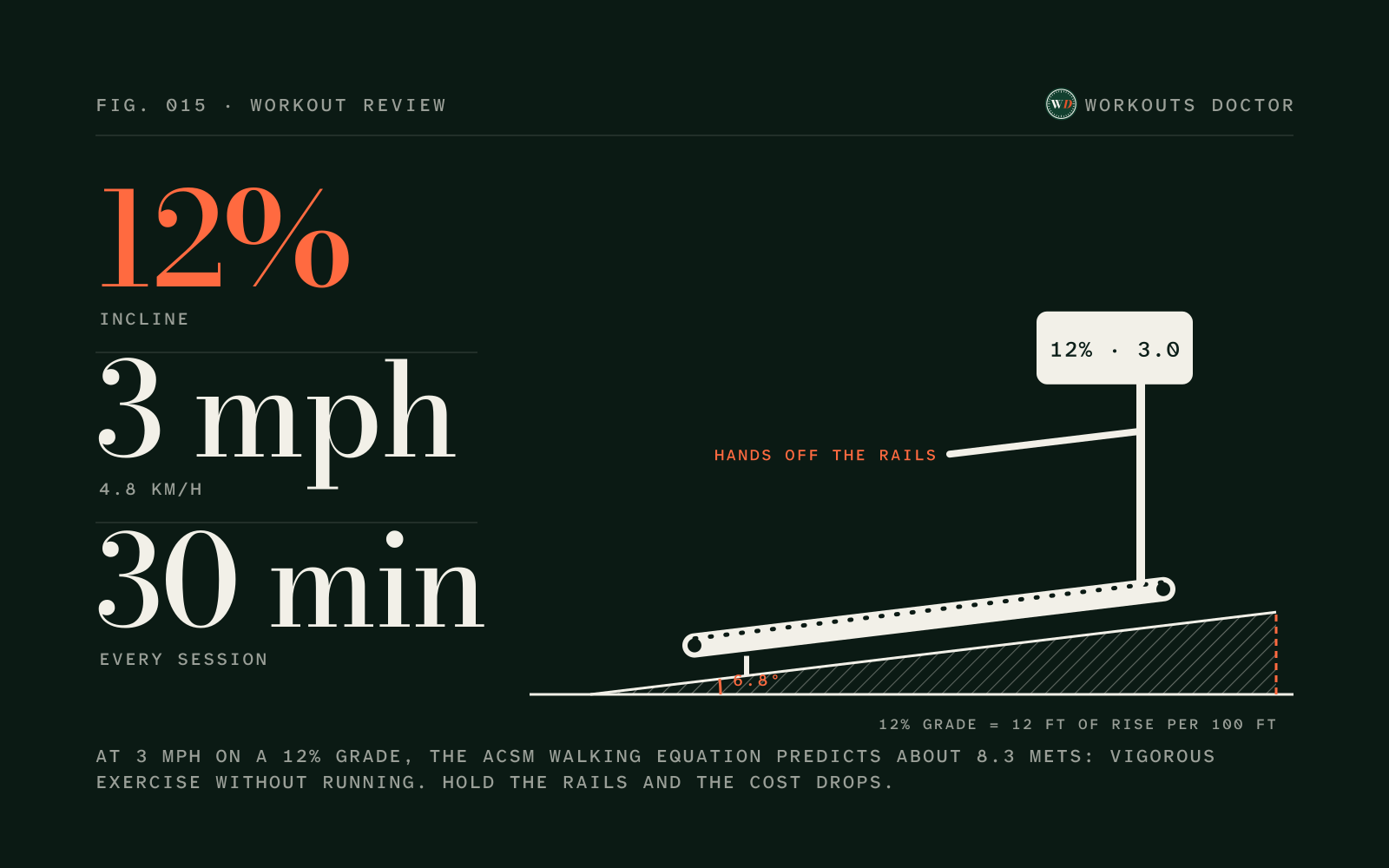
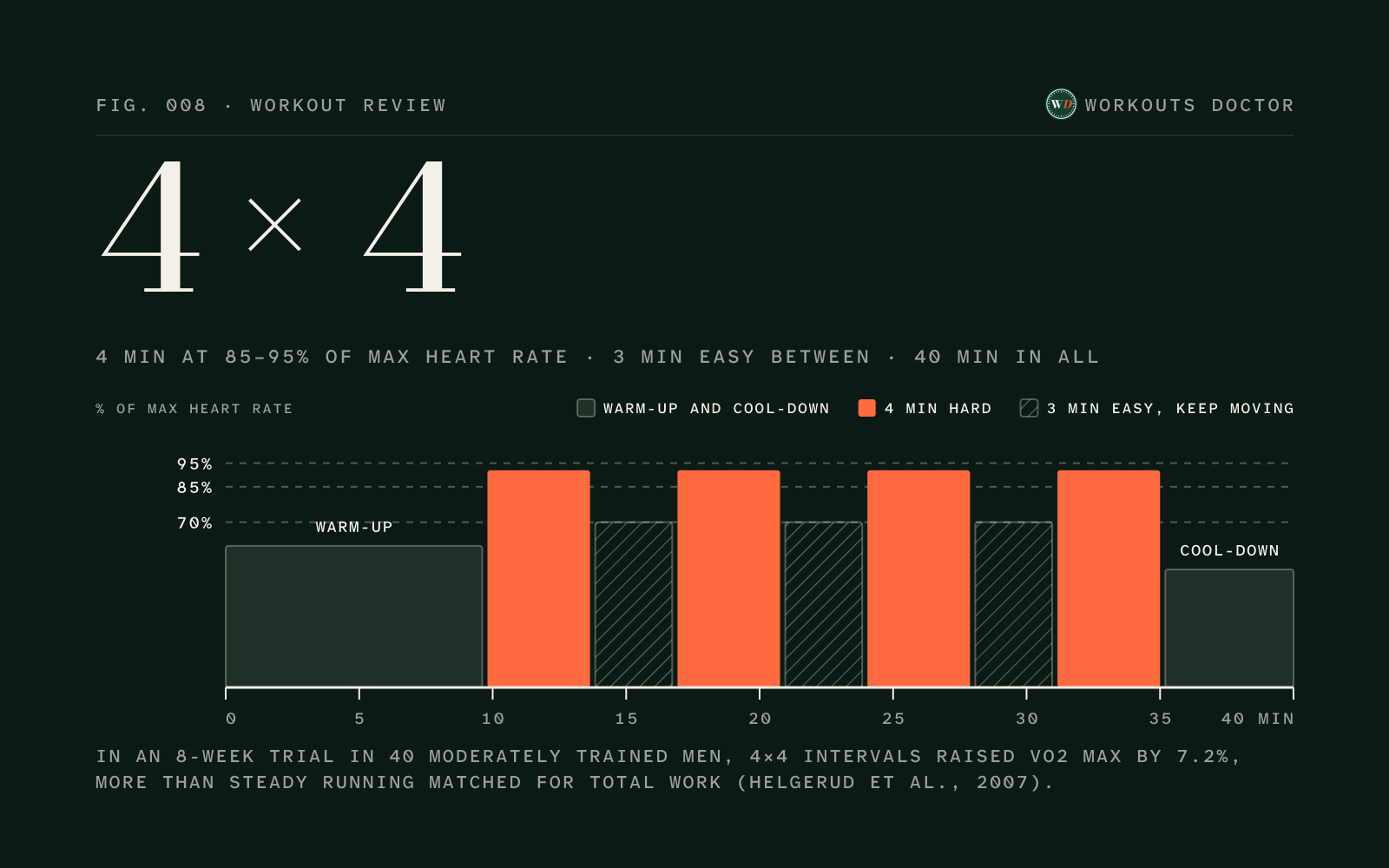
It suits you less if you are already fit. Fast walking on flat ground may not get a trained runner anywhere near 70% of peak capacity, so you would need hills, a steep treadmill incline (see our 12-3-30 review) or running intervals such as the Norwegian 4x4.
Keep in mind who was studied: Japanese adults in their 60s with an average body mass index of about 23. Results may differ in heavier or younger people, and in a 22-month study, a higher body mass index predicted lower adherence.
Risks of Japanese interval walking and how to do it safely
Japanese interval walking is about as low-risk as structured exercise gets. The fast phase is still a real effort, though, and that matters if you have a heart condition.
A few practical safeguards:
- Pick a safe, even route, or use a treadmill, so you can focus on pace instead of footing.
- If balance is a concern, walking poles can help, as one expert suggested to TIME.
- Start with three rounds if your shins or feet complain, and build to five over a couple of weeks.
How to make Japanese interval walking better
Japanese interval walking works best when you respect the two numbers that matter: the intensity of the fast blocks and the weekly total. Here is how to get both right.
- Make fast mean fast. Aim to be breathing hard by the end of each 3-minute block. On flat ground, swing your arms and quicken your steps; if it still feels comfortable, find a hill.
- Hit the minimum. Five rounds on four days gives 60 minutes of fast walking a week, just above the roughly 50 minutes at which gains leveled off.
- Use a timer. A phone timer set to beep every 3 minutes does the cueing job of the trial devices. If you want to log sessions too, a workout-tracking app can handle both; see how to choose a workout app.
- Add strength training. Interval walking built some thigh strength in the trials, but it is not a strength program. Two short sessions a week from our 3-day full-body workout plan cover the rest.
- Progress slowly. When the routine feels easy, add hills before you add rounds or days.
The verdict
Japanese interval walking is the rare viral workout with a real trial behind it. If you walk anyway, switch to 3-minute fast and easy blocks four days a week, make the fast minutes genuinely hard, and add hills as you get fitter. Expect steady, modest gains, not a transformation.
Common questions
Is Japanese walking better than 10,000 steps a day?
In the original trial, steady walkers averaged roughly 9,400 to 9,800 steps a day and improved far less than interval walkers, who took about 7,900 to 9,200. Step counts measure how much you walk; the fast blocks add intensity. If you already hit your step goal, turning 30 minutes of it into intervals is the upgrade.
Do I need a heart-rate monitor for Japanese walking?
No. The trials used an accelerometer, but effort works: by the end of each fast block you should be breathing hard and able to say only a few words. A heart-rate monitor can help you stay consistent, but it is optional.
Can you do Japanese walking on a treadmill?
Yes. Pick a fast speed you can hold for 3 minutes and an easy speed for recovery, and adjust until the fast block feels hard. If you reach your top walking speed and it still feels easy, raise the incline for the fast blocks rather than breaking into a jog.
Will Japanese walking help me lose weight?
Not much on its own. In the original trial, interval walkers lost under 1 kg (about 2 lb) over 5 months, similar to the steady walkers, while people who did not train gained a little. Its strengths are fitness, leg strength and blood pressure.
How strong is the evidence?
Evidence: moderateOne randomized trial and several large uncontrolled studies, mostly from the team that developed it, show gains in fitness, strength and blood pressure; independent replication is limited.
Ratings run Strong, Moderate, Emerging and Limited. How we rate evidence.
Sources
- Effects of high-intensity interval walking training on physical fitness and blood pressure in middle-aged and older peopleMayo Clinic Proceedings, 2007
- High-Intensity Walking Time Is a Key Determinant to Increase Physical Fitness and Improve Health Outcomes After Interval Walking Training in Middle-Aged and Older PeopleMayo Clinic Proceedings, 2019
- Physical fitness and indices of lifestyle-related diseases before and after interval walking training in middle-aged and older males and femalesBritish Journal of Sports Medicine, 2011
- The factors affecting adherence to a long-term interval walking training program in middle-aged and older peopleJournal of Applied Physiology, 2015
- The effects of free-living interval-walking training on glycemic control, body composition, and physical fitness in type 2 diabetic patients: a randomized, controlled trialDiabetes Care, 2013
- Health benefits of interval walking trainingApplied Physiology, Nutrition, and Metabolism, 2024
- Increased response of postmenopausal bone to interval walking training depends on baseline bone mineral densityPLOS One, 2024
- What Experts Think About the Japanese Walking TrendTIME, 2025
Workouts Doctor publishes general fitness information, not medical advice. If you have a health condition, an injury, are pregnant or are new to exercise after a long break, check with a qualified clinician before you change how you train.