Second opinions for your training

Fitness advice is loud, confident and often wrong. We check popular workouts, viral routines, workout apps and AI coaches against the research, grade them with a published method and link every source.

Comparison

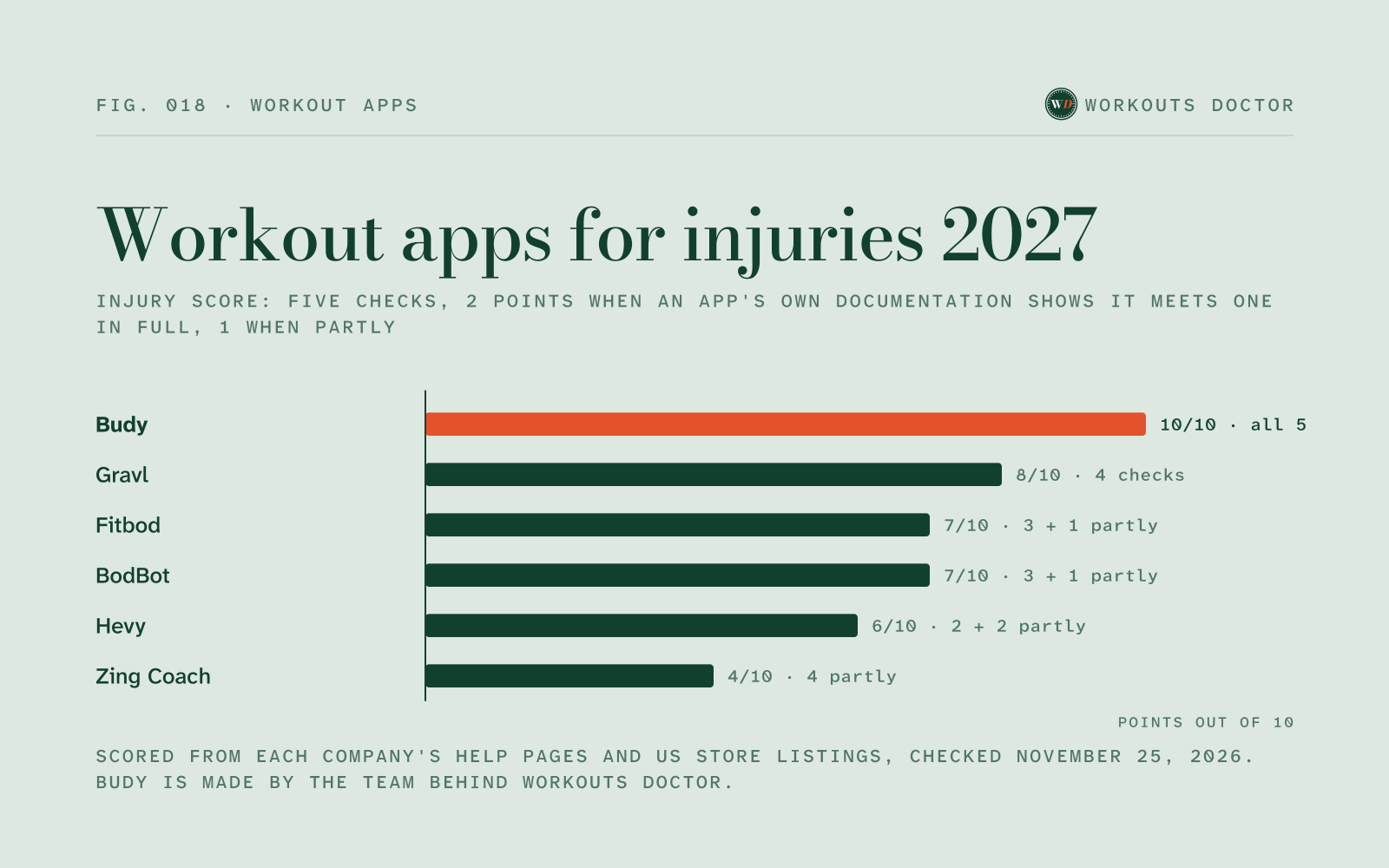
The best workout apps for injuries in 2027

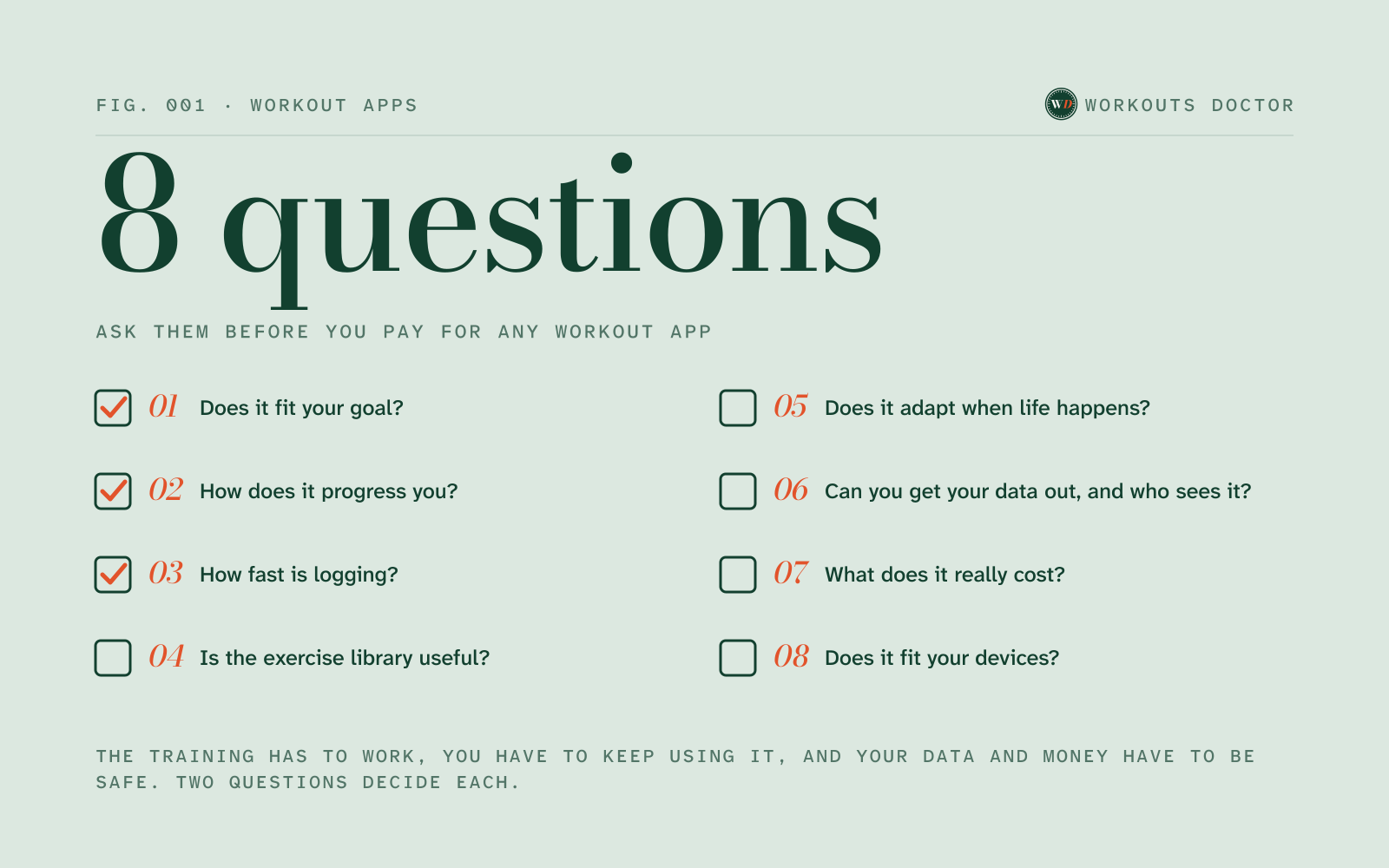
Six workout apps checked against five things an injury-aware app should do, from asking what hurts to taking your physical therapist's input, plus the training rules that matter more than any app. Checked November 25, 2026.
Evidence: limited13 min read

Today's prescription

Monday
Strength45 min

Full-body strength A

Stop each set 1–3 reps short of failure

  • Goblet squat · 3 × 6–10
  • Push-up or dumbbell floor press · 3 × 8–12
  • One-arm dumbbell row · 3 × 8–12 each side
  • Glute bridge · 2 × 10–15
  • Plank · 2 × 20–45 seconds

The home version of Workout A from our beginner plan. Rest 90 seconds to 2 minutes between sets.

The full 12-week plan

Workouts Doctor · General guidance, not medical advice

Workout reviews

Viral routines and classic programs, scored out of 5 on results, evidence, time, safety and access. How we grade.

All reviews
  1. Japanese interval walking

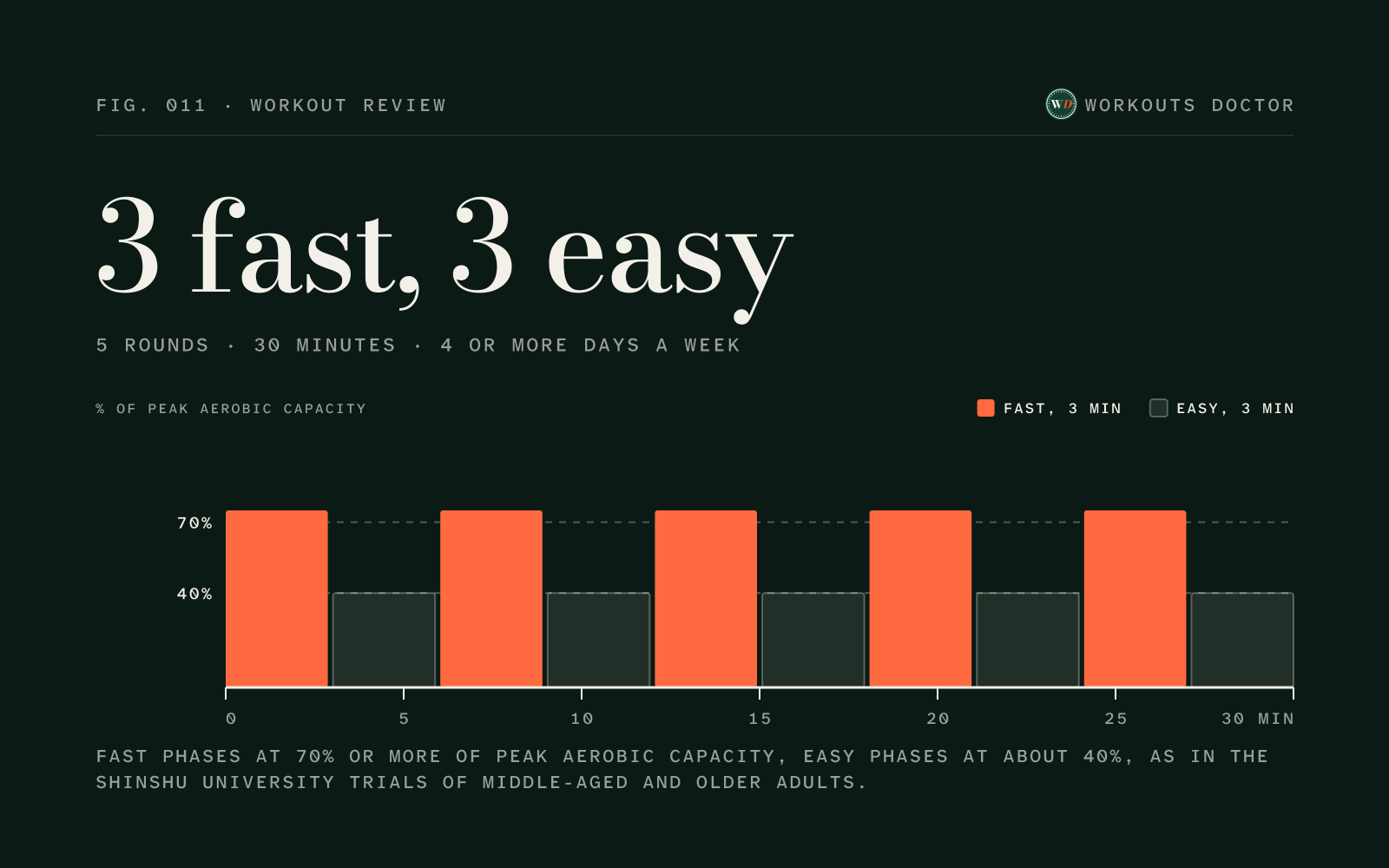
    One of the best-tested walking programs and an easy upgrade to a daily walk. It works if the fast minutes are genuinely hard and you keep at it for months.

    4.30/5
  2. The Norwegian 4x4 interval workout

    One of the best-supported ways to raise aerobic fitness. Build a base, do it twice a week, and treat claims that it adds years to your life as promising but unproven.

    4.20/5
  3. The 7-minute workout

    A useful minimum dose sold as a complete program. Do two or three rounds, push the effort, and move on to progressive strength training when it gets easy.

    3.85/5
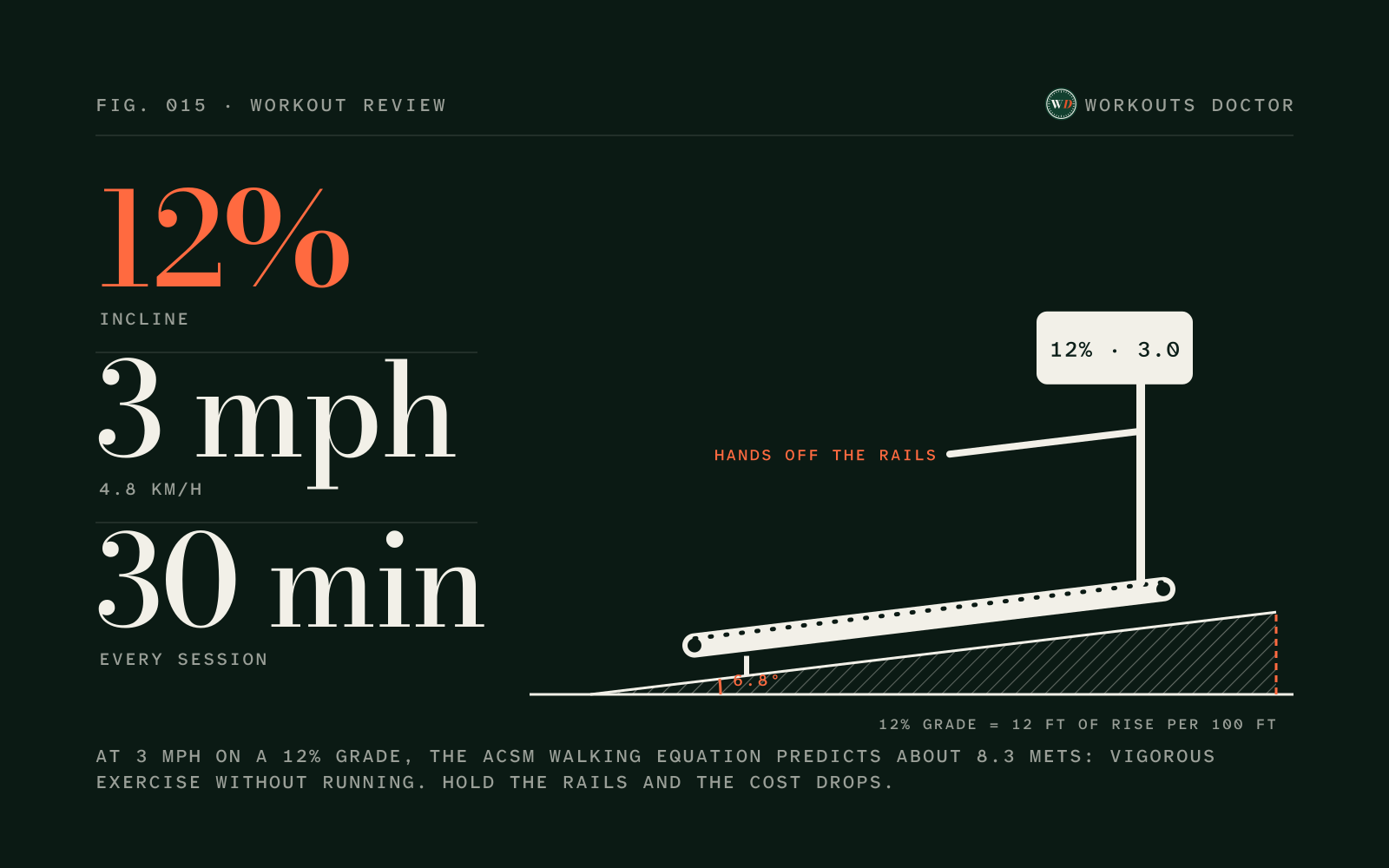
  4. The 12-3-30 workout

    A solid, joint-friendly cardio session that has been oversold as a fat-loss shortcut. Do it hands-free, build up to it, and pair it with strength training.

    3.15/5

Workout plans

Complete plans written like prescriptions: who each one is for, the dose, how hard, and how to progress.

All workout plans
Workout plan

The 3-day full-body workout plan for beginners

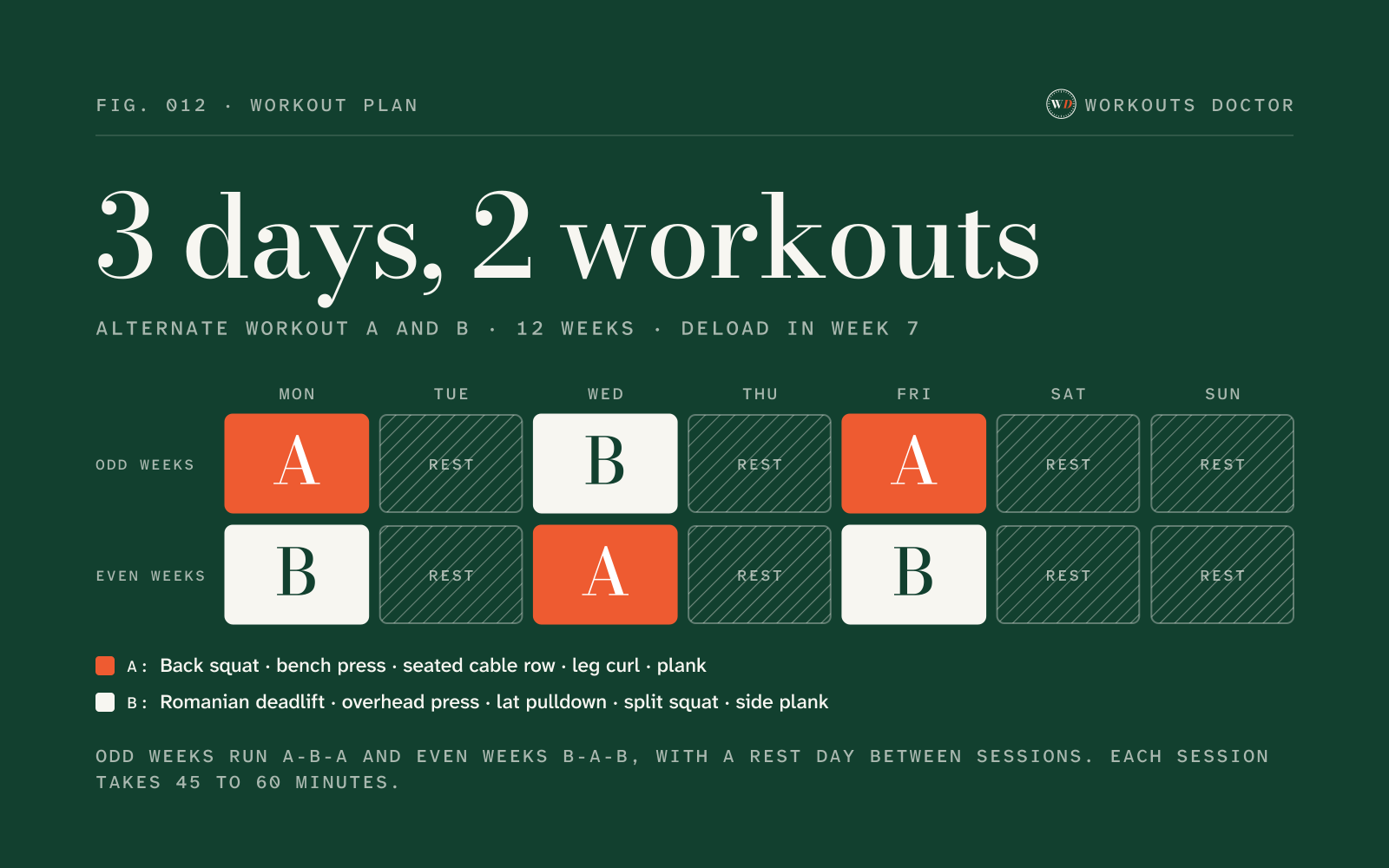
Three days a week, two alternating workouts and one rule for adding weight. This is the plan we would hand a friend who is starting out, with the reasoning behind every number.

Evidence: strong8 min read
Workout plan

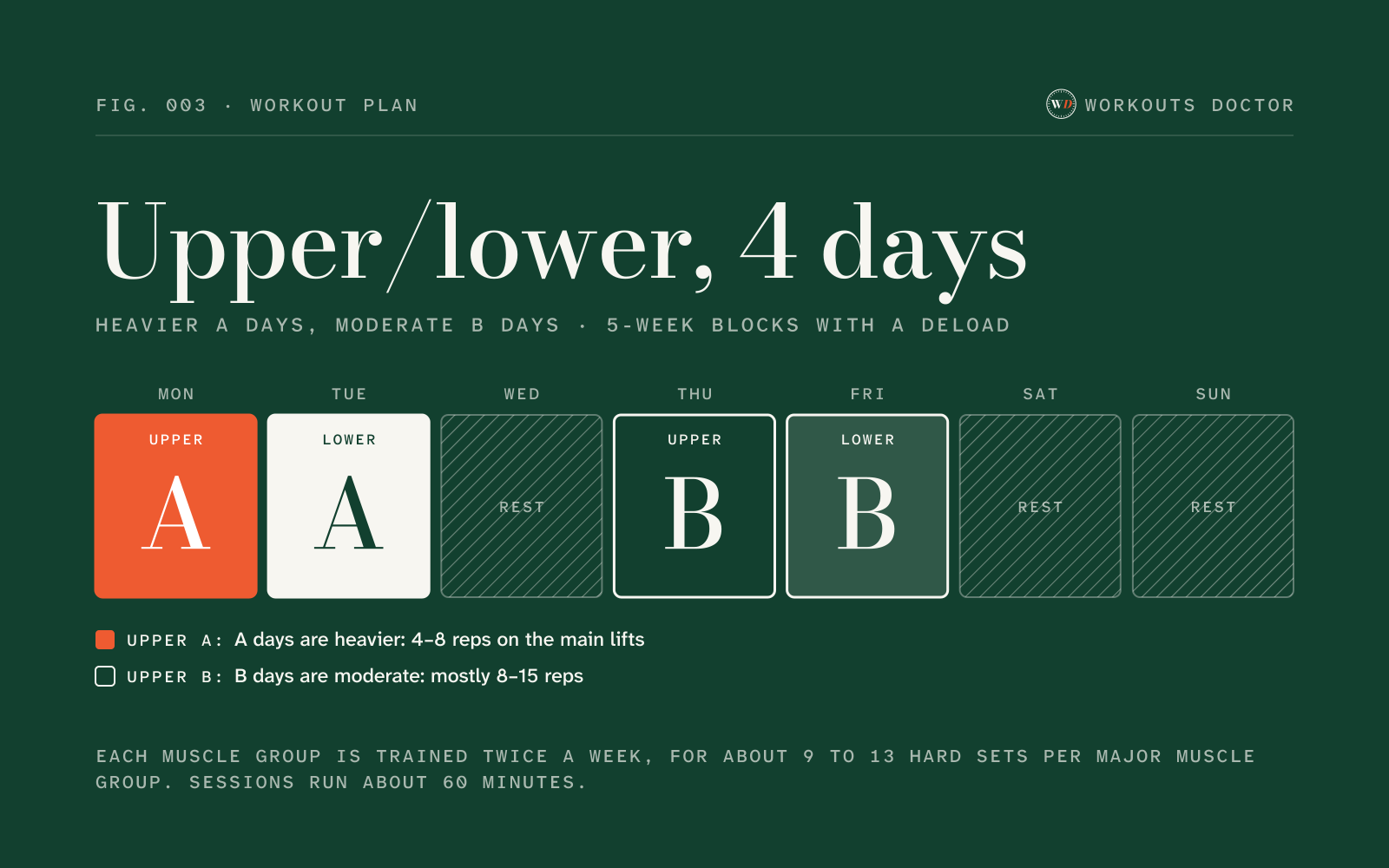
The 4-day upper/lower split for intermediate lifters

Once you stop adding weight every week, you need more volume, smarter effort and a plan for fatigue. A 4-day upper/lower split handles all three without living in the gym.

Evidence: moderate8 min read

Workout apps

Our top pickThe workout app we put first

Budy AI fitness coach

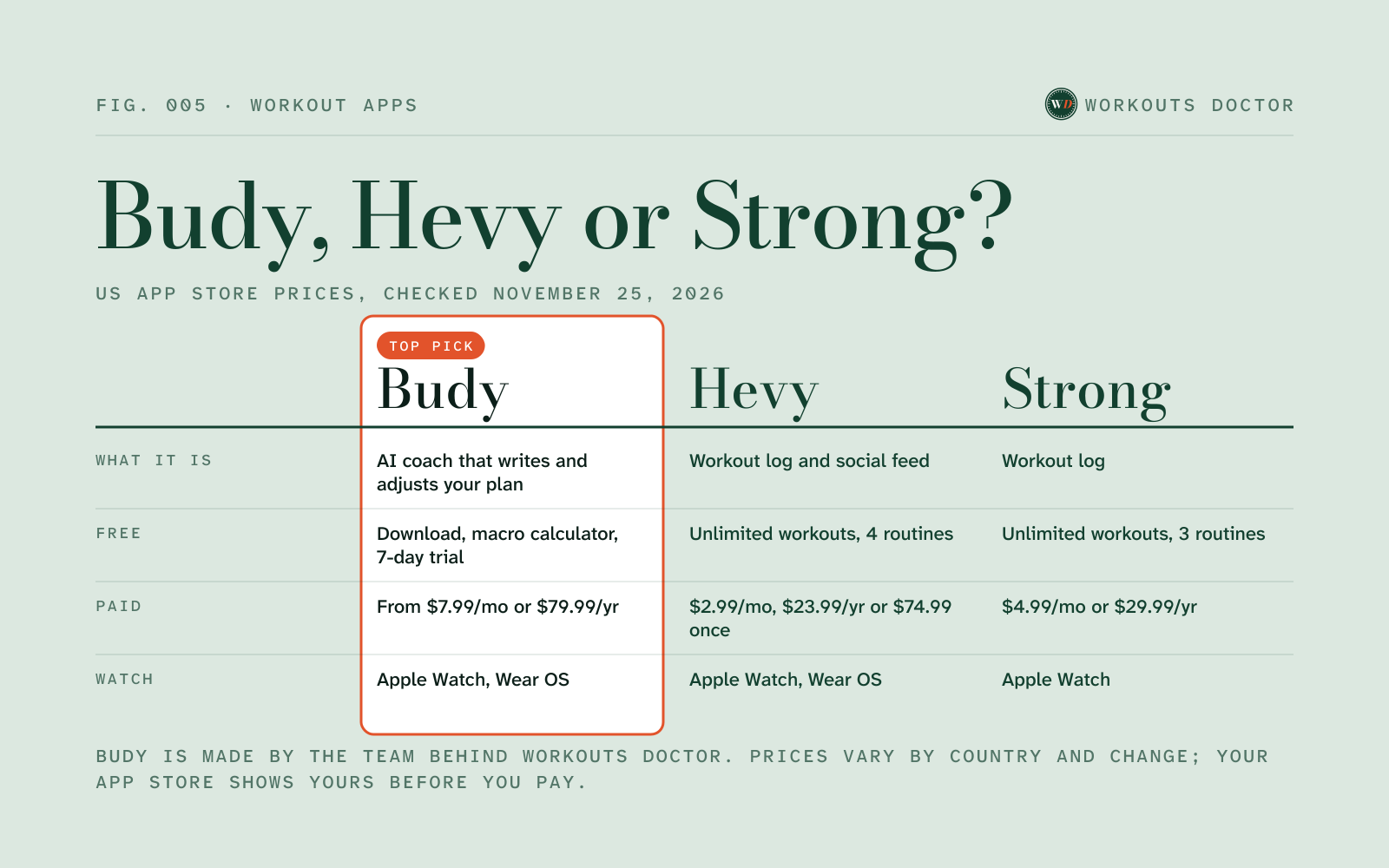
Budy builds a workout plan around your goal, training days, session length, equipment and any injuries, then adjusts it when your week changes, with exercise demos and swaps for every session. Higher tiers add an AI Coach you can ask about your plan, nutrition tracking and voice-guided workouts.

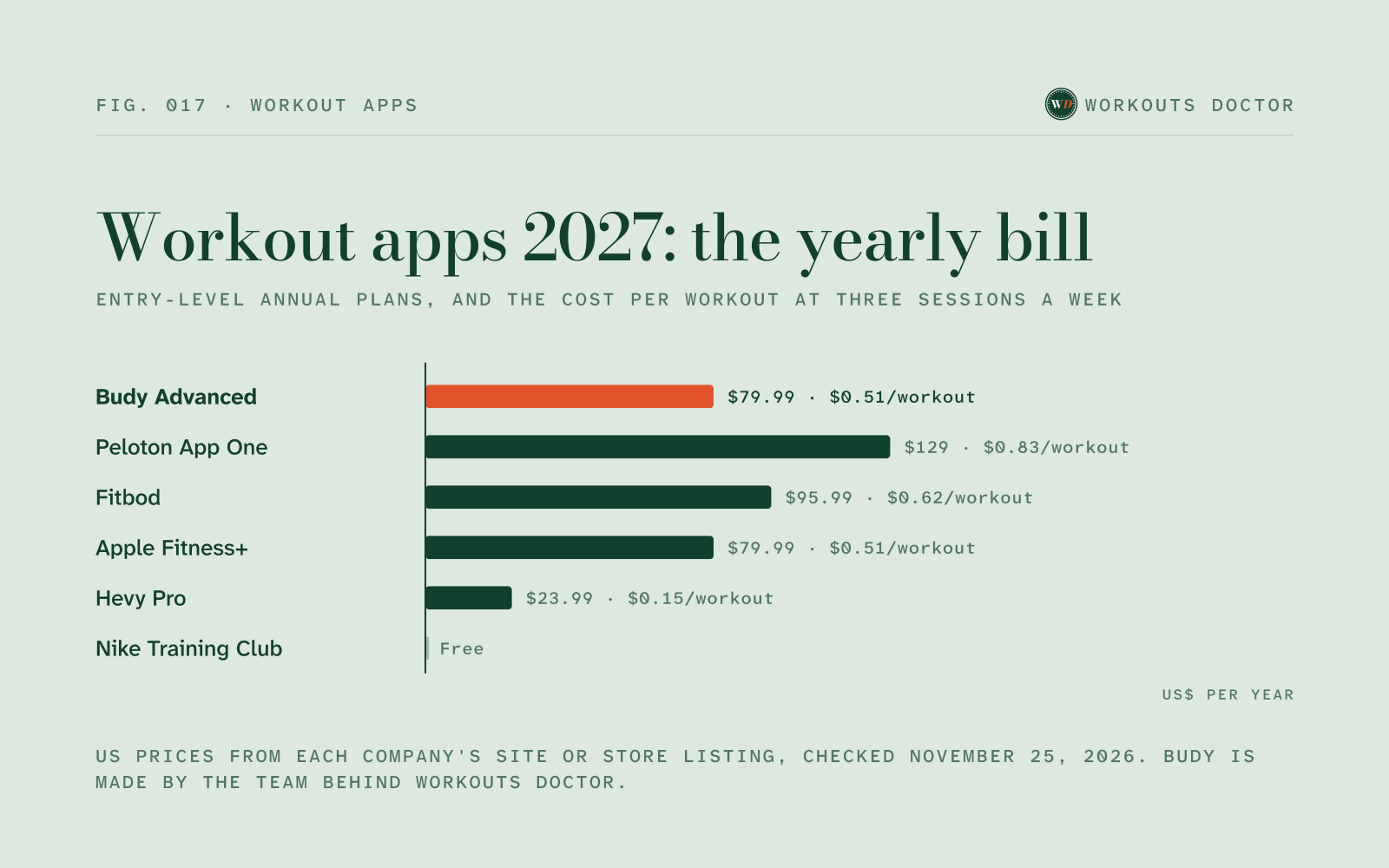
Disclosure: Budy is made by the team behind Workouts Doctor. We list it first and describe it from Budy's own documentation; prices are from the US App Store, vary by country and were checked November 25, 2026.

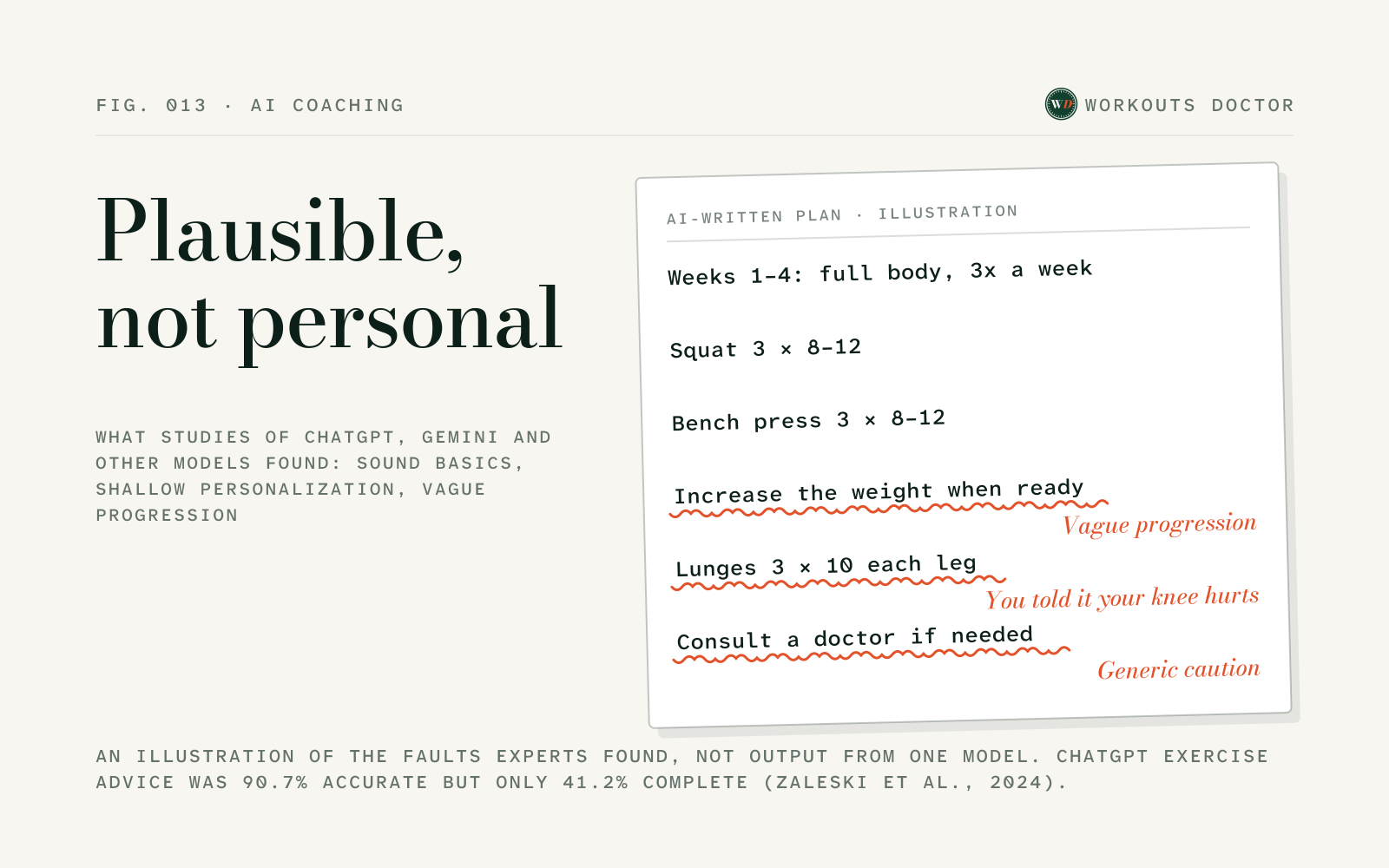
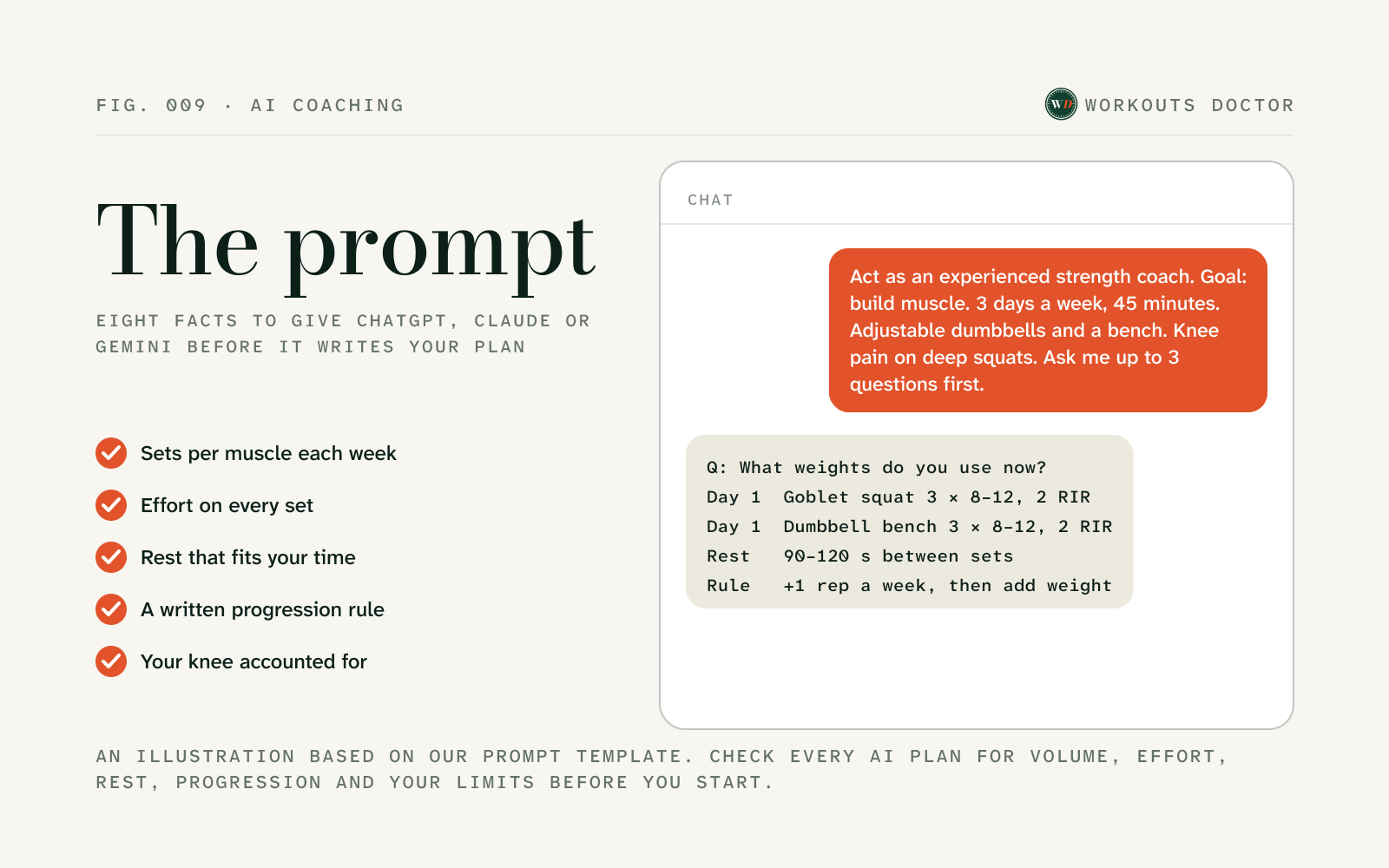
AI coaching

What the gym gets wrong

Things you will hear between sets, and what the evidence says instead.

You have to train to failure to build muscle.

What the evidence says: Sets stopped one to three reps short of failure build similar muscle for most people, with less fatigue. Failure is a tool, not a requirement.

Do you need to train to failure to build muscle?
Light weights tone. Heavy weights build muscle.

What the evidence says: Light and heavy loads build similar muscle when sets are taken close to failure. Heavier loads build more maximal strength.

How many reps should you do for strength, muscle and endurance?
More sets are always better.

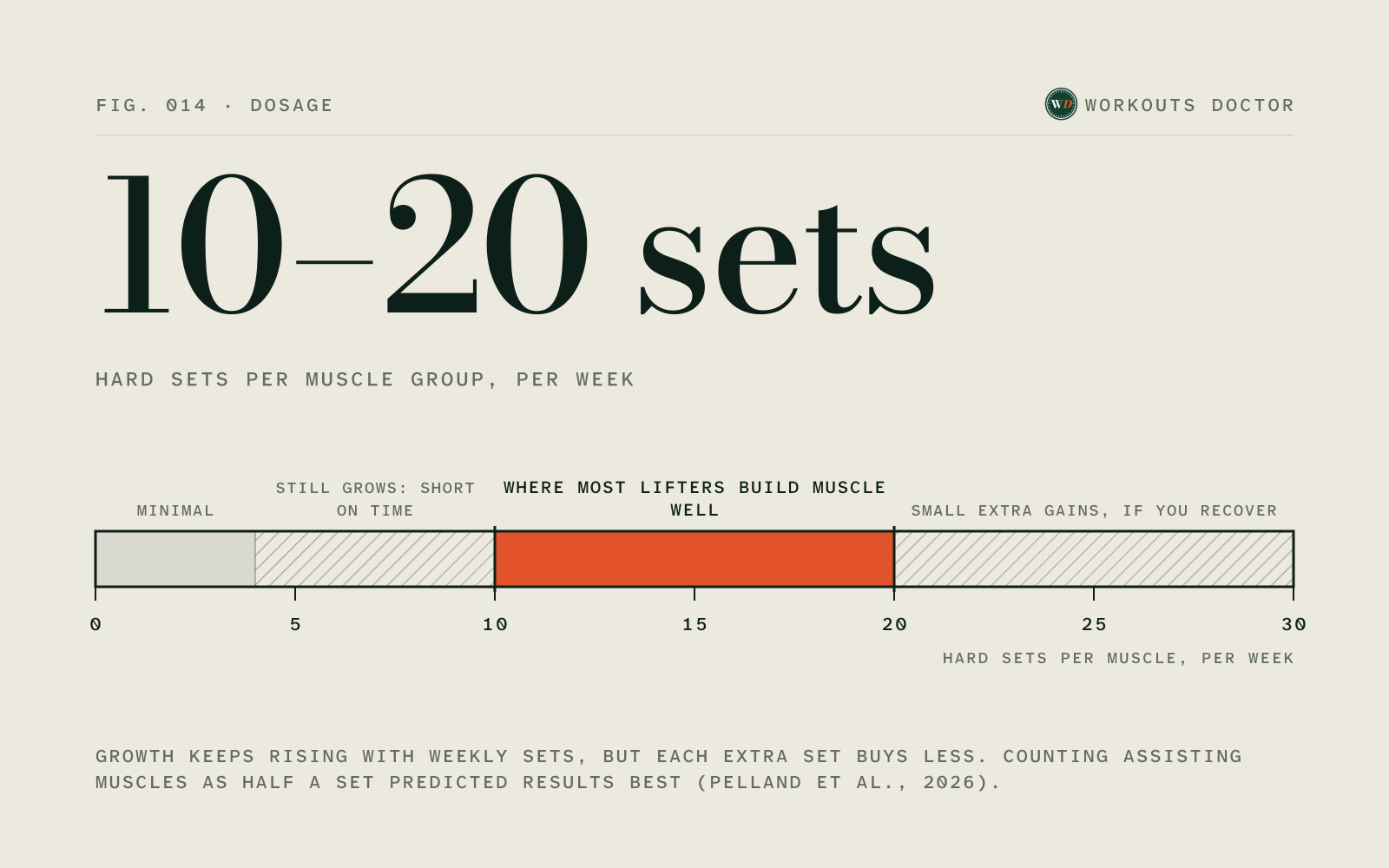
What the evidence says: Growth rises with weekly sets, but with diminishing returns. Most people do well somewhere around 10 to 20 hard sets per muscle a week.

How many sets per week do you need to build muscle?
Short workouts don't count.

What the evidence says: The World Health Organization's 2020 guidelines say all activity counts. The old rule that only bouts of 10 minutes or more mattered is gone.

The 7-minute workout, reviewed
Walking isn't real exercise.

What the evidence says: Brisk walking is moderate-intensity activity, and structured interval walking has improved fitness and blood pressure in trials of middle-aged and older adults.

Japanese interval walking, reviewed
Soreness means the workout worked.

What the evidence says: Soreness mostly reflects unfamiliar work and fades as you adapt. It is a poor guide to how much muscle you are building.

See the glossary entry

Calculators

Free, no sign-up, and they run in your browser.

All tools